News Blog


Stay Up to Date on the Latest CAMM News

Go Back to Blog Page

Wisconsin Maritime Museum Seeking Collections Manager/Registrar

Position Closed.

Job Title: Collections Manager/Registrar

Location: Manitowoc, WisconsinWMM Logo Small

 Closing Date: Until filled.

 Position: Full-time.  Competitive salary and benefits.

 Send applications to: Cathy Green, Deputy Director WMM cgreen@wisconsinmaritime.org  or call 920-684-0218 x120 for more information.

 Background:  The Collections Manager/Registrar at the Wisconsin Maritime Museum performs and manages essential museum-related collections and management tasks. As the State’s official maritime museum, the Wisconsin Maritime Museum cares for a collection of nearly 10,000 objects, including the WWII submarine USS Cobia. In addition, the collection includes 60,000 photographs, 7,000 books, 15,000 periodicals, 9,000 blueprints, and a large manuscript collection. It is one of the largest maritime collections on the Great Lakes and reflects the museum’s mission of documenting the role of Wisconsin in maritime history.

The Wisconsin Maritime Museum is between Milwaukee and Green Bay, in Manitowoc, Wisconsin, on the shores of Lake Michigan.  Photo WMM

Job Description: Responsible for the care, accessioning, cataloging, and general management of museum collections.  Assists the public and museum staff with research and the study of museum collections.  Assists the museum in formulating policy that effects collection management. Supports and implements the pan-institutional goal of increasing public access to, and relevance of, museum collections and curatorial research. Trains and manages collections volunteers. Reports to the WMM Deputy Director/Chief Curator.

Responsibilities:

  • Develops and implements policies and procedures that are in keeping with best professional practice for the registration, documentation, packing, handling, storage, care condition, display, and security of objects on loan to and in WMM collections.
  • Assists curatorial staff with provenance research as well as collections refinement and deaccession projects.
  • Manages all aspects of loans to and from WMM including—but not limited to—issuing loan agreements; making international, national, and local packing, crating, insurance, and shipping and courier arrangements; completing incoming and outgoing condition reports; entering loan and exhibition information into collections management database.
  • Conducts ongoing WMM database development and management, including recording locations, cataloging objects, updating record information, unifying lexicon, accessioning, deaccessioning, and inventory.
  • Monitors (in coordination with Building Facility Coordinator) environmental conditions and light levels in museum.
  • Maintains collection photo files and schedules/oversees new photography as needed.
  • Under the direction and oversight of the Chief Curator, processes paperwork for all new museum acquisitions, including gifts and purchases.
  • Assists with maintaining WMM AAM accreditation, including reaccreditation.
  • Coordinates bi-monthly Collection Committee meetings.
  • Assists in the research, planning, and installation of exhibits.
  • Routinely prepares thank you letters and other correspondence regarding donations, loans, and research
  • Manages the museum’s off-site collection storage facility.
  • Assists in searching for funds for collection management and research projects and contributes to collections management-related grant activities.
  • Ensures use of proper conservation and preservation methods for all items in the museum’s collections.
  • Ensures compliance with laws and regulations pertaining to collections and collecting activities.
  • Works with the Chief Curator and Museum Building Facility Coordinator to maintain, evaluate, and update disaster preparedness plan.
  • Contributes regular social media posts, website content, and to the museum’s quarterly journal, The Anchor.
  • Carries out internal and external research requests.
  • Recruits, trains and supervises volunteers and staff when they are working on collection and research related projects; maintains records on use of collection.
  • Represents the museum as a participant or speaker at public meetings or seminars.
  • Completes other tasks and duties as assigned from time to time.

 Qualifications:

  • A degree in library science, museum studies, archival management, or related humanities field; M.A. degree preferred.
  • Preferred minimum of the three years professional experience in museum or related field.
  • Understanding of the importance of cultivating donors, subject matter experts, and volunteers; ability to interact well with staff, volunteers, and public.
  • General knowledge of collection management and conservation procedures and methodology; including familiarity with PastPerfect collection and contact management software.
  • Working knowledge of archival research methods.
  • Displays initiative and self-direction.
  • Ability to organize and prioritize work and to supervise others.

Physical Demands:  Must be able to physically access all collections objects at several locations, including the interior of a World War II U.S. submarine; a warehouse racking system; and boat storage (basic bending, standing, sitting, climbing). Must be able to lift objects up to 20lbs.  Occasional exposure to dust and/or mold when assessing potential collections or during conservation efforts.


National Park Service and Maritime Administration Announce $2.6 Million in Maritime Heritage Preservation

The National Park Service announced today $2.6 million in maritime heritage grants to assist funding 34 preservation and education projects in 14 states and the Northern Mariana Islands. In partnership with the U.S. Department of Transportation’s Maritime Administration (MARAD), the National Park Service awarded grants for projects that teach about and preserve sites and objects related to our nation’s maritime history.

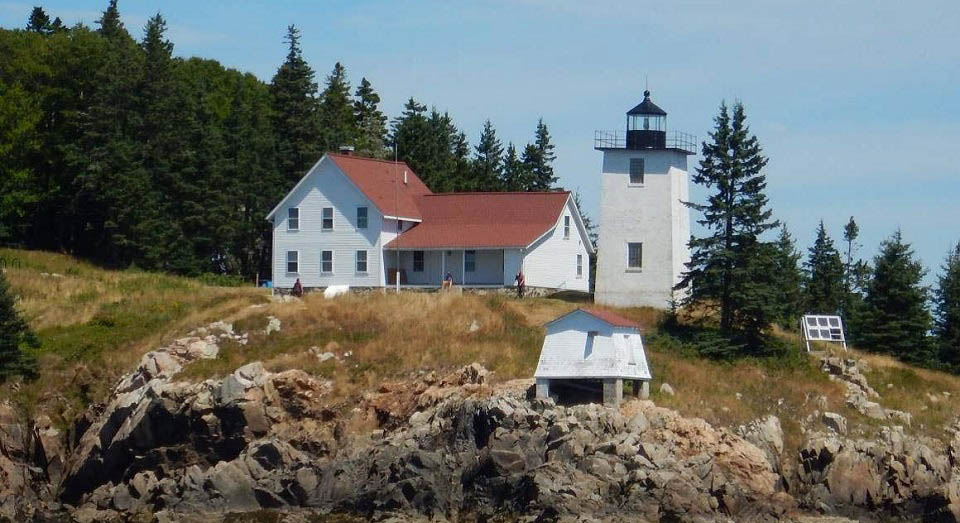
White building next to lighthouse on rocky ground with forest next to it.
The Burt Coat Harbor Lighthouse on Swan’s Island, Maine is one of this year’s grant recipients. Photo: Town of Swan’s Island


“From exploration, to industry, and military conflict, these grant projects tell the story of our nation’s history through a maritime lens,” National Park Service Deputy Director Dan Smith said. “Through a collaborative effort, the National Park Service is dedicated to conserving these treasures and enhancing public awareness of our maritime heritage.”

“Since 2014, MARAD has provided more than $7 million in funding to support our nation’s maritime heritage projects,” said Maritime Administrator Mark H. Buzby. “These ships, lighthouses and other strategic maritime vessels have played an integral role in our nation’s success at sea. By preserving these maritime artifacts, we hope to inspire future generations with America’s maritime legacy.”

The National Maritime Heritage Program grant awards are made possible through a partnership between the two federal agencies, which both share a commitment to maritime heritage preservation and education. They are funded through recycling of vessels from the from the MARAD’s National Defense Reserve Fleet. The grant program supports a broad range of maritime education and preservation projects, without expending tax dollars, while ensuring that the vessels are dismantled in an environmentally sound manner.

The National Park Service will administer these projects as direct grants to State Historic Preservation Offices, who will disburse funds to applicants. The recipients of the National Maritime Heritage grants are below.

For more information about the grants and the Maritime Heritage Program, please visit www.nps.gov/martime/grants.intro.htm.

National Maritime Heritage Program Grant Recipients

State/ Territory  Recipient  Project Title  Amount
Alaska Alaska Association for Historic Preservation NN Cannery History Project $49,993.00
California Maritime Museum Association of San Diego A Preservation Project to Ensure the Long-Term Integrity of the Sailing Ship Star of India $200,000.00
California San Francisco Maritime National Park Association USS Pampanito World War II Submarine Preservation Project—Phase II $174,945.00
California Port of Los Angeles High School Port of Los Angeles High School Career Technical Education Program: Boat Operations $50,000.00
California Yurok Tribe Redwood Dugout Canoe Adventure Phase I $50,000.00
California National Steinbeck Center Restoration of the F/V Western Flyer and development of educational programs connecting literature and science $191,130.00
Connecticut Mystic Seaport Museum 1921 Fishing Schooner L.A. Dunton Documentation and Survey Project $103,703.00
Delaware Kalmar Nyckel Foundation Tall Ship Time Machine Digital Media Project $38,661.00
Florida University of West Florida Gulf Coast Digital History Project $34,708.00
Massachusetts USS Constitution Museum A Sailor’s Life for Me: Optimizing Online Resources for Mobile Responsiveness $50,000.00
Massachusetts New Bedford Fishing Heritage Center The Fishing Industry: Then and Now $18,535.00
Massachusetts Essex National Heritage Area Commission Bakers Island Light Station Maritime Field Education Project $35,014.00
Massachusetts Lowell’s Maritime Foundation (Boat Shop) Lowell’s Boat Shop Apprentice Program: Learning on the River $50,000.00
Massachusetts Old Dartmouth Historical Society A Spectacle in Motion: A Publication of the Grand Panorama of a Whaling Voyage Around the World $29,190.00
Maryland Annapolis Maritime Museum and Park A New Permanent Exhibit: “White Gold: The Lure and Legacy of the Maryland Oyster” $37,000.00
Maryland Project Liberty Ship Preservation of Hull and Underwater Portions of SS John W. Brown $200,000.00
Maryland Baltimore Children’s Museum The New Port of Baltimore Exhibit at Port Discovery Children’s Museum $50,000.00
Maryland Chesapeake Bay Maritime Museum Edna E. Lockwood Educational Tour of the Chesapeake Bay $45,845.00
Maine Town of Swan’s Island Burnt Coat Harbor Light Station Light Tower Restoration $85,000.00
Maine Greater Portland Landmarks Association Enhancing the Visitor Experience at the Portland Observatory $40,000.00
Northern Mariana Islands Task Force Dagger Explore, Map, and Research WWII Sites in the Western Pacific $49,540.00
New York Saint Lawrence Valley Educational Television Council New York’s Seaway Lighthouses $35,000.00
New York Destroyer Escort Historical Museum Shipyard Repair of USS Slater Mast and Hull $200,000.00
New York SS Columbia Project SS Columbia: Preservation and Stabilization $100,852.00
New York Whaling Museum Society A Public Program Series in Maritime and Whaling Heritage $22,628.00
New York Seaport Museum Wavertree Deckhouse and Aft Accommodations Preservation $66,047.00
New York National Maritime Historical Society National Maritime Historical Society Maritime Library and Digital Collections $50,000.00
Pennsylvania Carnegie Institute The Requin Gateway Project $49,771.00
Virginia Virginia Department of Historic Resources Retreatment of Excavated Betsy $81,168.00
Virginia City of Alexandria Conservation of Alexandria’s 18th-century Wooden Ship $97,117.00
Vermont Lake Champlain Maritime Museum Submerged Cultural Resources Management Program $42,918.00
Washington Virginia V Foundation Reframe the Stern of SS Virginia V $200,000.00
Washington U.S. Lighthouse Society U.S. Lighthouse Society Archives Catalog Project $48,600.00
Wisconsin Wisconsin Historical Society Unloading History: Self-Unloaders and the Development of the Maritime Industrial Landscape $54,245.00
Total     $2,631,610.00

About the National Park Service. More than 20,000 National Park Service employees care for America’s 417 national parks and work with communities across the nation to help preserve local history and create close-to-home recreational opportunities. Visit us at www.nps.gov, on Facebook www.facebook.com/nationalparkservice, Twitter www.twitter.com/natlparkservice, and YouTube www.youtube.com/nationalparkservice.

Courtesy of the National Park Service.

CBMM’s Master Plan to Bring New Buildings, Growth to Museum

The Chesapeake Bay Maritime Museum in St. Michaels, MD.  Photo CBMM

(ST MICHAELS, MD – May 10, 2018) The Chesapeake Bay Maritime Museum in St. Michaels, Md., has announced the completion of a new Master Plan, which will create increased space for CBMM’s core museum offerings—including exhibitions, education, and Shipyard. CBMM’s Master Plan process began in mid-2017, under the leadership of President Kristen Greenaway.

“CBMM’s Master Plan is a vision for CBMM’s campus for the next 20 years, and is designed to greatly enhance the guest experience,” said Greenaway. “The Master Plan will support CBMM’s mission and world-class maritime museum status by enabling CBMM to offer new and expanded programming.”

Through a competitive RFP, museum and education building specialist Ann Beha Architects of Boston, Mass., was chosen to develop CBMM’s Master Plan in July 2017. The process began with a series of visioning sessions, with input gathered from members of the community, CBMM’s Board of Governors and Friends Board, staff, and volunteers.

The scope of the plan is broad, addressing all facets of the physical campus, including new and re-oriented buildings, wayfinding, guest accessibility and comforts, and prioritizing CBMM’s natural, waterfront environment.

Phase I of the Master Plan consists of the construction of a new building for changing exhibitions, a long-term waterfowling exhibition, CBMM’s library and archives, and landscaping upgrades to Navy Point. The new facility will replace CBMM’s current Bay History and Waterfowling exhibition buildings, with the buildings’ artifacts to be relocated; demolition of the buildings is anticipated to begin in spring 2019. The new library and exhibition building is anticipated to open in 2020.

“This new facility offers a higher standard of climate control than we have anywhere, other than in our collections facility,” continued Greenaway. “It will also move our exhibitions and archival collections above the flood plain. Currently, both our Waterfowling and Bay History buildings are extremely vulnerable to flooding from storm surge events.”

CBMM’s Master Plan includes raising the grade of new buildings and walkways above regulated limits in anticipation of long-term needs. Other proposed changes include enhancements to the Navy Point lawn, and relocation of the Tolchester Beach Bandstand and Point Lookout Bell Tower to other locations within CBMM’s campus.

Rendering of the planned New Exhibition & Library Building in CBMM Master Plan.  Photo CBMM

“After the investigation of numerous options and alternatives, a very thoughtful and exciting campus vision has emerged—one that ticks all of the Master Plan objectives boxes,” commented CBMM Board of Governors Chair Diane Staley. “Still, there’s much work to be done before shovels touch earth.”

Three phases make up the Master Plan, with the scope and timeline expected to be six to eight years, contingent upon funding. Funding sources are planned to come from individual donations and naming opportunities, grants, and operations. Phases II and Phase III will focus on further expanding CBMM’s education and Shipyard capabilities.

The public is invited to a Community Forum on Tuesday, June 19, from 6:00-8:00 p.m. in CBMM’s Van Lennep Auditorium, where CBMM will host a community conversation and share more information about the Master Plan.

Established in 1965, the Chesapeake Bay Maritime Museum is a world-class maritime museum dedicated to preserving and exploring the history, environment, and culture of the entire Chesapeake Bay, with the values of relevancy, authenticity, and stewardship guiding its mission. To learn more about the Master Plan, visit cbmm.org/masterplan.

Original story at CBMM News & Media.

Mystic Seaport Museum Launches New Brand Identity: Radical Craft. Get Into It.

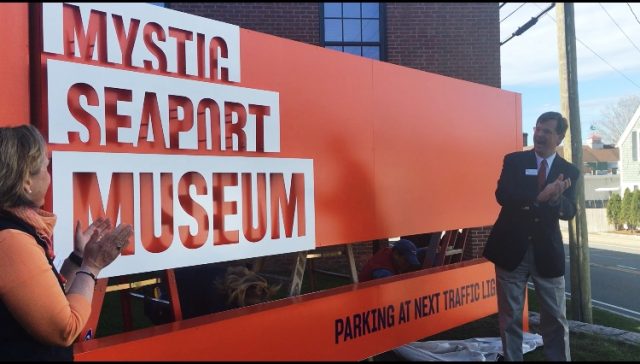
On Tuesday, May 1, Mystic Seaport launched its new brand identity, strengthening its roots as an organization devoted to maintaining a strong connection to the American maritime experience while also moving confidently forward as a major 21st century cultural institution.

Mystic Seaport Museum President Steve White and Susan Funk, executive vice president and COO, celebrate the unveiling of the Museum's new name , logo and branding on Tuesday, May 1, 2018. Photo: Elissa Bass/Mystic Seaport Museum.
The rebranding effort includes a new logo and the inclusion of “Museum” in the organization’s name (photo MSM).

As part of the rebranding, Mystic Seaport Museum unveiled a redesigned logo, website, and large-scale ad campaign on Tuesday, kicked off with the unveiling of new signage along Greenmanville Avenue. The launch is a key element of the Museum’s strategic plan to position itself as a more modern and relevant cultural center that continues to inspire an enduring connection to the American maritime experience.

The organization’s new logo, in the color nautical orange, presents a sharp, bold visual identity in a shape that references the planks of a ship with the cascade of stacked vertical text representing waves approaching shore.

“Today’s audiences value the community that a museum creates,” said Steve White, president of Mystic Seaport Museum. “By restoring the word ‘Museum’ to our name, we celebrate and showcase history while making a space for people to talk and think about issues that matter to them. Museums are contemporary centers of community and discourse and we are updating our identity to reflect that role.”

Mystic Seaport Museum’s new tagline, “Radical Craft.  Get Into It.” will anchor its new advertising campaign debuting this month. It is an action-oriented statement that shines the light on the Museum as a place that celebrates immersive experiences, craft and the evolution of seafaring innovation that was radical in its time. The ad campaign will feature the outstanding imagery created by the Museum’s photography staff.

“This new direction signifies the commitment of the Museum’s Board of Trustees to connect with, and inspire, the broadest possible communities, and to communicate the freshness and relevance of the Museum’s programs and exhibitions,” said J. Barclay Collins, chairman of the Board of Trustees of Mystic Seaport Museum.

Carbone Smolan Agency, an independent design-led branding agency that has worked with organizations such as Musee de Louvre, The Metropolitan Museum of Art, Natural History Museum of Los Angeles, and Christies served as the agency of record for the Museum’s rebrand and launch.

Reposted from Mystic Seaport News , April 30, 2018.

Emergency Preparedness: Because There May Come a Day…

cid:image003.jpg@01D3DE3B.BFD6D2C0Our friends at the Smithsonian directed us to the MayDay initiative where each year, museums, archives, and libraries set aside the month of May to participate in MayDay, a global effort encouraging cultural institutions to do one simple thing for emergency preparedness. 

This MayDay archived article from the Smithsonian Institution from MAY 3, 2016, BY Alison Reppert Gerber highlights several ways to observe this tradition:

Riding in on the coattails of Preservation Week, MayDay is an annual tradition where libraries, museums, archives, historical societies, and preservation organizations set aside May 1 to participate in preparation activities for potential collections emergencies and disasters. First established by the Society of American Archivists and Heritage Preservation, and now taken on by the Foundation of the American Institute for Conservation, MayDay can be observed in several ways:

  • Revisit your emergency preparedness plan. If you already have one in place, take time to reexamine elements that may have changed in the last year – contact information, emergency team roles, salvage priorities, etc. If you don’t have a plan quite yet, sit down and make a realistic timeline for its development.
  • Participate in workshops and lectures covering emergency response and recovery. Having a written response plan is important, but understanding the hands-on salvage and recovery process can be invaluable if/when you find yourself in the situation. Sign up for local workshops to hone your skills, or, if you have the expertise, run your own workshop for local organizations!
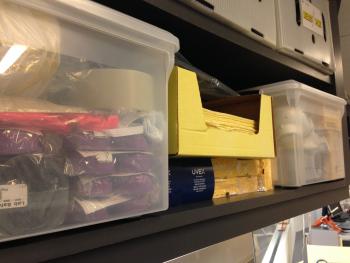
  • Inventory and replenish your emergency supplies. You may have used up some of your supplies over the last year for small emergencies or other collection activities. Take the time to inventory and replenish any supplies that may be missing from your kits.
  • Don’t forget about the safety of your staff and volunteers! The safety of people always comes first. Lead a building evacuation and identify areas for improvement. Conduct a walkthrough of collection and office spaces and remove any potential hazards, such as boxes blocking a hallway, improper storage of chemicals (including cleaning supplies), and office ergonomics. Make sure that emergency exits, shelter-in-place locations, and evacuation routes are all clearly labeled.
Emergency supplies.
Organizing your supplies in plastic bins make them easy to grab during an emergency, 04/26/2016, by Alison Reppert Gerber, SIA.

The idea of creating an emergency preparedness and response plan, or simply revisiting an existing one, may be a bit daunting and tough to know where to start. Luckily, there are lots of resources out there that can help you in the initial planning phase. Here are a few key elements that I think are vital to include in, and tailor to, your unique plan.

  • Clearly-defined staff roles – Each organization is unique not only in terms of their collections, but also in staff size and expertise. Identify who will be responsible for what during an emergency, and write it down in position descriptions. Here at SIA, the four roles we’ve identified for our emergency response team are: Emergency Coordinator, Assistant Emergency Coordinator, Emergency Recovery Coordinator, and Emergency Registrar.
    Emergency supplies.
    Inventory and replenish your emergency supplies on May 1, 04/26/2016, by Alison Reppert Gerber, SIA
  • Salvage priorities – Get to know your collection well. Meet with other staff members and identify the highest priority collection materials based on factors such as: intellectual value, instability of materials, overall preservation concerns, use by researchers and scholars, and appraised value. Include dimensions and locations in your list to aid in the recovery process.
  • Local emergency suppliers and contacts – When disaster strikes, you will need to know what companies are in your local geographic region that have the expertise to aid emergency activities such as moving collections, freezing and freeze-drying, mold remediation, digital data recovery, and dehumidification. Create and maintain a list of these vendors so that if you find yourself in the midst of a disaster, you know who to contact for help.

No matter how you choose to celebrate MayDay, just make sure you do ONE thing. Dust off those plans and make sure you’re ready! Additionally, if you report your fun and innovative emergency preparation activities to Gaylord Archival, you’ll be entered for a chance to win emergency supplies, including spill pillows, weatherproof paper, and a water detector.

Additional Resources for your consideration:

Related Resources

Talking and Doing About Emergency Preparation, The Bigger Picture, Smithsonian Institution Archives
May Day Motto: Be Prepared, The Bigger Picture, Smithsonian Institution Archives
What to Do When More Than a Few Papers Get Wet, The Bigger Picture, Smithsonian Institution Archives

Excerpted from the Smithsonian Institution Archives Blog

Naval History and Heritage Command Seeking Supervisory Staff Curator

There is a new posting on USAJOBS for the Supervisory Staff Curator (Museum Management) in the Collection Management Division of NAVAL HISTORY AND HERITAGE COMMAND.  USAJOBS posting HERE

Note the quick turn around time with open and close dates: Open & closing dates 04/26/2018 to 05/02/2018.

This is a permanent, full-time position with a competitive salary of: $96,970 to $126,062 per year at GS 13 pay grade.

Image result

Immediate Office of the Chief of Naval Operations, Department of the Navy: Washington Navy Yard, District of Columbia

Responsibilities:

  • You will serve as a Supervisory Staff Curator and perform a variety of routine and special duties in connection with the administration of the Curator Branch.
  • You will be responsible for oversight of the Collection Management Facility at Defense Supply Center Richmond.
  • You will be responsible for the day to day management of the artifact collection and tasked with implementing branch strategic initiatives such as the artifact baselines reset and backlog elimination projects.
  • You will answer technical and general inquiries from internal stakeholders as well as external partners on the accountability and conservation of historical properties in the collection.

Call for Papers for the Herreshoff Marine Museum’s 8th Annual Classic Yacht Symposium

HMM’s biennial Classic Yacht Symposium is “like Woodstock for Classic Yacht enthusiasts.”

The 8th Annual Classic Yacht Symposium is scheduled for March 22-24, 2019.  Over the course of three days, attendees will visit restoration shops to ogle projects in progress, debate the definition of “classic”, attend sessions with a variety of scholarly papers on a range of subjects presented by their authors, and bond with fellow classic yacht enthusiasts over adult refreshments.

CYS is unique in its special collaborative atmosphere because the event attracts a mix of owners, designers, builders and enthusiasts who gather biannually to celebrate the fine yachts of a bygone era and share their thoughts on the challenges of preserving, restoring, replicating, sailing and racing them.

Three Special Days of Classic Yachts including…

  • Ten Great Papers by Experts/Owners 
  • Shop Visits: Active Projects
  • Evening Panel Discussion
  • Museum Campus Visit & Exhibits
  • Evening Social Events

For 2019, CYS will be jointly produced by the Herreshoff Marine Museum and the Classic Yacht Owners Association.

Please click here to download the 2019 Call for Papers. Deadline May 31, 2018

Prospective authors can find instructions for papers by clicking here.

Photo Herreshoff Marine Museum


Lois McClure’s Summer 2018 GlassBarge Tour: A Lake Champlain Maritime Museum, Corning Museum of Glass, and South Street Seaport Partnership

Lake Champlain Maritime Museum’s 2018 summer partnership with Corning Museum of Glass and South Street Seaport is a unique four-month GlassBarge Tour combining resources, venues and collections to tell a compelling New York maritime story.

Lake Champlain Maritime Museum (LCMM) today announced the summer 2018 tour stops for Lois McClure, the museum’s full scale replica of an 1862-class sailing canal boat constructed in Burlington, Vermont. Lois McClure will accompany the Corning Museum of Glass (CMoG) GlassBarge this summer as they retrace the historic move of Flint Glass Works from Brooklyn to Corning, NY via canal where the company became Corning Glass Works, today known as Corning Incorporated.

Image
The Lois McClure (photo LCMM)

Aboard Lois McClure, trained historians, educators, and archaeologists will welcome the public to visit with the crew and learn about history of the canal systems and the momentous trip of Corning Glass.  In addition, the public will be able to see free glass-making demonstrationsaboard the GlassBarge at each scheduled stop.

Lois McClure begins the five month tour on May 17 in Brooklyn Bridge Park.  She will accompany the GlassBarge to Corning, with stops at ports in Yonkers, Poughkeepsie, Kingston, Albany, Little Falls, Sylvan Beach, Baldwinsville, Fairport, Lockport, Buffalo, Medina, Brockport, Pittsford, Seneca Falls, and Watkins Glen. The ceremonial arrival in Corning will be marked by a community-wide celebration on September 22. After this celebration Lois McClure will depart and head home to Burlington, VT alone. She will make more stops along the way and will arrive in Burlington, Vermont on October 6 for a community-wide celebration to welcome her return home after a 2 year absence. On the weekend of her arrival, a CMoG mobile hot glass shop, will joinLois McClure in Burlington to provide free public glassmaking demonstrations.

Lois McClure is 88’ long and weighs 74 gross tons. She is gaff-rigged with no auxiliary power. When operating in the canal system she is propelled by LCMM’s 1964 wooden tug C.L. Churchill. When she is on open water, she operates under sail. Lois McClure is the only example of an 1860s class canal boat anywhere in the world and she is an exact replica of the boats that worked the canal system in the time of Corning’s historic move.

“The Erie Canal system changed the lives and livelihoods for tens of thousands of people. Innovations like the sailing canal boats of the 1800s changed the way people and materials moved, and were instrumental in the growth of the northeastern United States and Canada,” said Erick Tichonuk, captain of Lois McClure and co-Executive Director of the Lake ChamplainMaritime Museum. “This year we embark on our largest tour yet with Lois McClure. We’re very excited to accompany the Corning Museum of Glass to retrace the historic journey from Brooklyn to Corning, NY on canal schooners much like Lois McClure. It’s an epic voyage of the arts and humanities, free and open to the public.”

Lois McClure Ports of Call
May 17-28: Brooklyn Bridge Park
June 1-3: Yonkers
June 8-10: Poughkeepsie
June 15-17: Kingston
June 21-24: Albany/Troy/Waterford
June 30-July 1: Little Falls
July 7-8: Sylvan Beach
July 13-15: Baldwinsville
July 20-22: Fairport
July 28-29: Lockport
August 3-5: Buffalo
August 11-12: Medina
August 17-19: Brockport
August 24-26: Pittsford
September 1-3: Seneca Falls
September 14-16: Watkins Glen
September 22: Corning

Visiting and Additional Information
Lois McClure will be open to the public for tours and to engage with and learn from our team of trained historians, archaeologists, and mariners. Tours are first-come, first-served and do not require registration. South Street Seaport Museum representatives will also be on hand to talk about their historic tug W.O. Decker that will be moving Corning’s GlassBarge along the waterways.

GlassBarge will provide daily demonstrations from 11 a.m. – 6 p.m. All demos are approximately 30 minutes long, and reservations are strongly encouraged through free timed tickets that will be available at www.cmog.org/GlassBarge. Registration will be live 4-6 weeks prior to each stop. Demos can also be viewed from shore without a reservation.

Lois McClure is possible with generous support from New York State Canal CorporationState of VermontLake Champlain Transportation Co.Champlain Valley National Heritage Partnership,Cabot CreameryLake Champlain ChocolatesSwitchback Brewing Co., and the McClure family.

We’d also like to thank our partners Corning Museum of Glass and South Street Seaport.

About Lake Champlain Maritime Museum
Lake Champlain Maritime Museum in Vergennes opened its doors as a non-profit museum in 1986. Beginning in an original historic stone schoolhouse, its waterfront campus has grown to over a dozen buildings serving upwards of 3,500 students and 12,000 visitors and researchers each year through nautical exploration, pedagogy and experiential learning adventures. We inspire students to ‘Learn from the Lake’ and make valuable connections between the discoveries made through underwater research and historical exploration and the future of their communities and the world around them. The museum campus is open from May 26 to October 14 with summer camps, workshops, special programs, and exhibits. Learn more athttps://www.lcmm.org.

 Courtesy of Lake Champlain Maritime Museum

Call for Papers and Registration for the 28th Meeting of the Artefacts Consortium in Chicago

The Adler Planetarium is proud to host the 28th meeting of the Artefacts Consortium in Chicago USA!  Registration and paper submission are now open. 

ARTEFACTS XXIII

October 14-16, 2018
Adler Planetarium
Chicago, USA

 Artefacts Consortium 

The Artefacts Consortium is an international association of historians in museums and academic institutions who share the goal of promoting the use of objects in serious historical studies. Artefacts meetings are opportunities for professionals to explore the use, care, and interpretation of objects and collections.

 Meeting Theme: Relevance of Collections

 The 2018 Artefacts meeting will explore how museums and related institutions have defined and maintained the relevance of their collections. This follows up on themes explored in previous Artefacts meetings and described in the volume Challenging Collections from the Artefacts XVI meeting. As the editors note in the introduction to this volume, museums today “must balance a number of functions, not always mutually compatible: exhibition, preservation, research, and education. …  the nature of museums’ relationships with their public has shifted from one of unquestioned authority to a partner in dialogue” (Boyle and Hagmann 2017). At the same time, humanities scholars have had increased interest in objects, collections, and museums.  For a range of stakeholders, collections provoke questions of status and purpose that are, organizational, social, and intellectual.

 As context and events changed how museums operate, how have scholars at museums and other institutions approached the relevance of collections? In what way have interpretations changed depending on prevalent historiography and motivations of the interpreter? What is the impact of changing techniques available for examining objects? How do institutions prioritize acquisitions and displays for their collections? How has the growing importance of digital access affected the role of collections? More generally, in what ways are history collections relevant to broader society?

 This meeting will allow scholars within and outside the museum community to explore how the relevance of museum collections has changed through history. It will also enable museum professionals to pose challenging questions about the present and future of relevance of collections.

 Call for Papers

 The deadline for submitting papers and session proposals is July 20We particularly welcome paper and session proposals addressing the following topics:  

 – Collections and artifacts in the identity and public image of museums and similar institutions
– Shifts in the scope and focus of collecting while balancing scholarly activities and public engagement
– Shifts in object interpretation and display in response to societal changes and pressures
– The place of scholarly inquiry in shaping the maintenance, development, and use of collections
– Challenges in setting priorities for the use and maintenance of collection
– The role of digital collections in museum practice and audience engagement.


 Please use the links below for more information.
Registration, Paper Submission, and Lodging information
Artefacts Consortium

Lowell’s Boat Shop and Museum seeks a Program Director

Lowell's Boat Shop & MuseumLowell’s Boat Shop and Museum, located in Amesbury, Massachusetts, seeks a Program Director to support their mission through design, delivery, and evaluation of educational programs. The Program Director is responsible for daily operations of student programs: staff assignments, training, budget, and coordination with other staff; supervising museum educators and volunteers; and research, design, and delivery of LBS programs at the Museum, on the water, and in schools for K-12 students and teachers.   In addition, s/he will formalize and sustain a vocational high school level boat building apprentice program and increase access for underprivileged communities, develop an Education budget, and assist the Executive Director and development staff in identifying grant opportunities.

This is a full-time position which includes occasional evenings and weekend days; requirements include a Bachelor’s Degree in History, Education or a related field and three year’s experience coordinating and delivering education programs, preferably in a museum or non-profit institution.

A NATIONAL LANDMARK & WORKING MUSEUM


Established in 1793, Lowell’s Boat Shop is the oldest continuously operating boat shop in the United States and is cited as the birthplace of the legendary fishing dory. Lowell’s is the only remaining survivor of the area’s world-renowned dory manufacturing industry that produced in excess of a quarter of a million dories over a period of two centuries. Building more than 2000 boats in 1911, this business was one of the first in the Nation to employ a seminal form of assembly line manufacturing.

With the founding of his company, Simeon Lowell made radical innovations to traditional boat design. Known for their efficiency, durability and sea worthiness, Lowell dories became the heart and soul of the Gloucester fishing fleet. In the waning days of the great fishing industry, recreational boaters turned to Lowell dories for the same qualities that attracted the fishermen. Rowing clubs, hunting camps, the Boy and Girl Scouts and the Lifesaving Service all sought Lowell dories and skiffs for their maritime experiences.

Conveyed through seven generations of the Lowell family, Lowell’s Boat Shop was passed to the Odell family in the 1980’s and then to the Newburyport Maritime Society in the 1990’s. In 2006, Lowell’s was purchased by Lowell’s Maritime Foundation, an independent non-profit group with the mission of leading this National Landmark and Working Museum through its third century of wooden boat building.

For more information, please visit our website: www.lowellsboatshop.com
To apply, please send resume and cover letter to info@lowellsboatshop.com.

Application deadline: May 15, 2018.

Quick Links


Home

Annual Conference

Become a Member

News Blog

Resources

Follow CAMM on Facebook button

Get In Touch


Find Members by Location

Find Members by Name

Send Us a Message