Tim Runyan, chair of the National Maritime Alliance is leading the effort to restore funding to the Maritime Heritage Grants program to its original levels:
The “Storis Act” offered by Sen. Begich of Alaska includes Section 5 (c) that would restore funding for the maritime heritage grants program at the former level before the MARAD amendment to the 2010 National Defense Authorization Act gave all authority to MARAD. Today I learned MARAD is pushing back in order to keep the money, so we have a fight.
Bills are being marked up on Capitol Hill as I write. We must write now to members on the committees that will be involved in this bill. There are 4 committees—2 House, 2 Senate. Click here for Senate / House committees list (Word Version) or (PDF version).
Here is a letter template for your convenience. Fill it out with your information. Email the letter to the committee members from your home state. You can write to all senators through their Senate web site—you must be a member of the district to submit a letter to a congressman via their web site. Unless you have an email address to send to, you will need to copy and paste your letter into their online form. I suggest sending a hard copy of your letter by snail mail.
Please send me a copy of your letters.
I thank you for stepping up and your willingness to help. We must contact these members of the House and Senate now if we are to succeed. Millions in grant funding for the maritime heritage community is at stake. Please make these contacts.
The Maritime Executive recently posted “Returning Ship Recycling Funds to American Museums” by Denise Krepp. This was a hot topic at the recent Maritime Heritage Conference in Norfolk. Tim Runyan of the National Maritime Alliance strongly encouraged maritime heritage groups to contact Congress in support of the Storis Act.
Tahoe Maritime Museum (TMM), Homewood, California, seeks an experienced, creative professional for the position of Curator. Reporting to the Executive Director, the Curator’s principal responsibilities are the care and management of the Museum’s artifact and archival collections. The job also entails researching artifacts and historical themes for the development of exhibits and programs. This position requires the ability to collaborate closely with the other members of the Museum staff and volunteers, and interact effectively with community members and the general public.
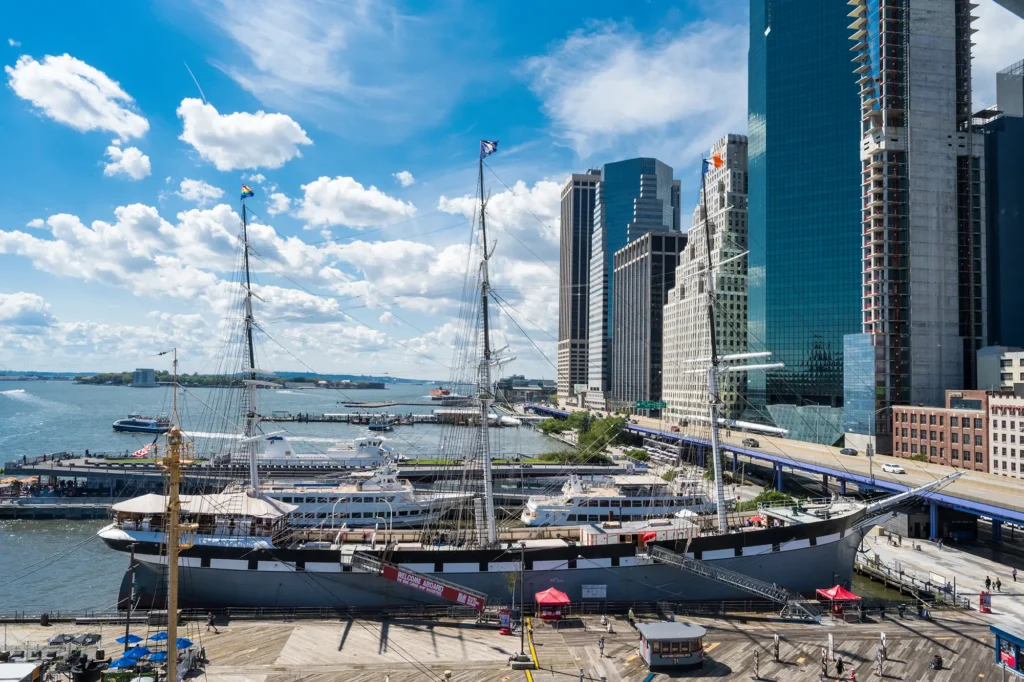
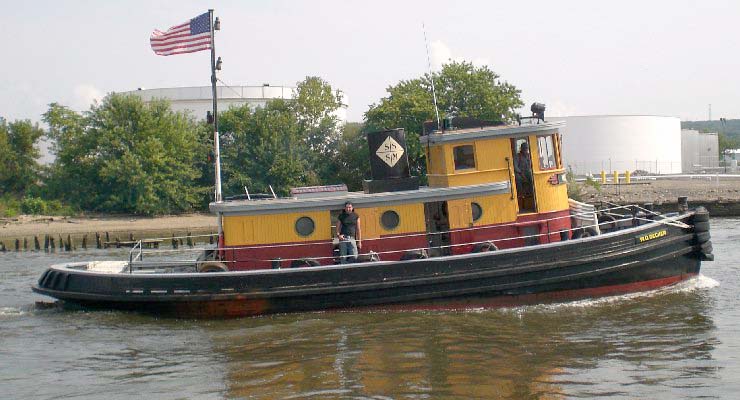
South Street Seaport Museum, located in a 12 block historic district, once the city’s main port, is dedicated to preserving and interpreting the history of New York as a port city. The Museum houses a major collection of maritime art and artifacts and comprehensive archival materials related to the Port of New York. It owns and operates a large fleet of historic ships, including two large square-riggers, PEKING and WAVERTREE, three operating vessels, PIONEER, LETTIE G. HOWARD, and W.O.DECKER (above), and the lightship AMBROSE. The Museum offers innovative programs, exhibitions and educational opportunities to diverse communities both ashore and afloat.
South Street Seaport Museum seeks a Director of Operations to oversee administration, front of house operations, event logistics, and internal processes and procedures. As part of a small, hard-working team, this position leads and supports all departments including Visitor Services, Historic Retail Shops, IT, Marketing, Development and Membership, Education, Programs, Facilities, and Collections.
Rendering of the new exhibit hall courtesy Mystic Seaport
Mystic — Mystic Seaport has applied for permission to construct a state-of-the-art exhibition hall on the north end of the Museum grounds. The new building will greatly expand the institution’s capability to host large exhibits and will be the cornerstone for an improved year-round experience for the visitor.
Scheduled for September 8 – 9 in South Haven, Michigan, this conference will explore and celebrate our Great Lakes fisheries heritage as a means to promote coastal tourism development. opportunities.
Discover how our valuable Great Lakes fisheries (past, present, and future) can benefit local museum programs, enhance coastal tourism development opportunities, and support community development efforts. Learn more about Michigan’s Great Lakes Fisheries Heritage Consortium projects and partnerships, including current opportunities toward designating a statewide fisheries heritage tourism trail.
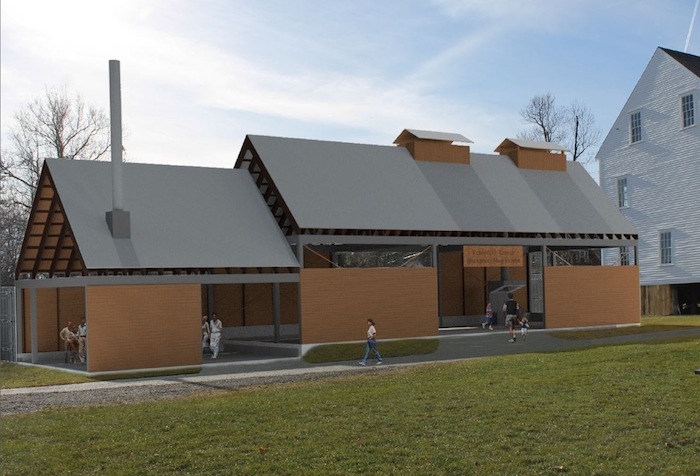
Architectural rendering of blacksmith exhibit at Maine Maritime MuseumOpening Day – August 15, 2014. Photo by Candace Clifford
BATH, Maine, July 22…When the ribbon is cut for the Kenneth D. Kramer Blacksmith Shop Exhibit during a member’s reception on Friday, August 15, it will mark the latest transformative addition to Maine Maritime Museum’s campus and will complete the curated story of the historic Percy & Small Shipyard, part of the museum’s campus and a remarkable story in Maine’s maritime heritage.
From 1894 to 1920, the Percy & Small Shipyard built an astonishing 41 four- five- and six-mast schooners. Of only 11 six-mast wooden schooners ever built in the Americas, 7 were constructed at the P&S yard including Wyoming, largest of them all. When the P&S site was donated to the museum in 1975, it was remarkably intact, the only U.S. shipyard that built large wooden sailing vessels that still had original buildings. The only one missing was the blacksmith shop.
“While it may seem surprising that a blacksmith shop would be an important part of a wooden vessel shipyard,Wyoming was built with more than 300 tons of iron and steel,” says Amy Lent, the museum’s executive director. “In addition to the anchor and usual metal fastenings and fittings present in all ships, the huge wooden ship’s hull could not have borne the incredible pressures created by the 6,000 long tons of coal in her holds without the iron strapping that kept her timbers in place.”
During the 26 years that the P&S shipyard was in business, there were two different buildings that served as the blacksmith shop. The first, which outfitted all of the six-mast schooners, was destroyed by fire in 1913 – not an unusual occurrence for wooden buildings housing open forges in an environment filled with wood shavings and sawdust. Very little information is available about the interior of that building and few clear exterior photos exist. The shop contained at least one forge and also a boiler for the yard’s steam box for making heavy planking pliable. The second blacksmith shop building was torn down in 1939, long after P&S had ceased operation.
Opening day – August 15, 2014. Photo by Candace Clifford
The exhibit approximates the original building’s dimensions of 84 x 26 feet and location due east of the Paint & Treenail Shop. To preserve the integrity of the shipyard’s original historic buildings, the new structure is not an attempt at a historical recreation of the original building. Instead, the proportions, dimensions and materials used evoke the original building and its purpose while clearly being a contemporary structure.
While the open design permits expansive views of the P&S shipyard and the Kennebec River, an innovative combination of corrugated weathering steel (which oxidizes to a rust-colored finish) and rough-cut wood framing was selected to reference shipbuilding materials.
The structure houses exhibits related to the blacksmith activities that took place there while also providing a gathering place for functions and visitors. On occasion, blacksmithing demonstrations will be conducted in the building.
Replacing the blacksmith ship was a vision of former MMM Trustee Kenneth D. Kramer, who passed away in 2009 leaving a generous bequest that included funds to construct a Blacksmith Shop building. Thanks entirely to Ken the complete shipbuilding story of the great schooners can now be told, and so the new exhibit building bears his name.
The Puget Sound Maritime Historical Society is having an online maritime book sale through eBay. The link to their ‘store’: http://www.ebay.com/usr/psmaritimehs.