Two positions have been announced–one for a general project architect and one for a dedicated maritime architect. This position is located in the Heritage Documentation Programs division that includes the Historic American Buildings Survey (HABS), Historic American Engineering Record (HAER), and the Historic American Landscapes Survey (HALS) of the National Park Service in Washington,D.C.
Newport News, VA – The USS Monitor’s Worthington Direct-Acting Simplex Pumps were designated a Historic Mechanical Engineering Landmark by the American Society of Mechanical Engineers (ASME) in a August 26, 2016, ceremony at The Mariners’ Museum.
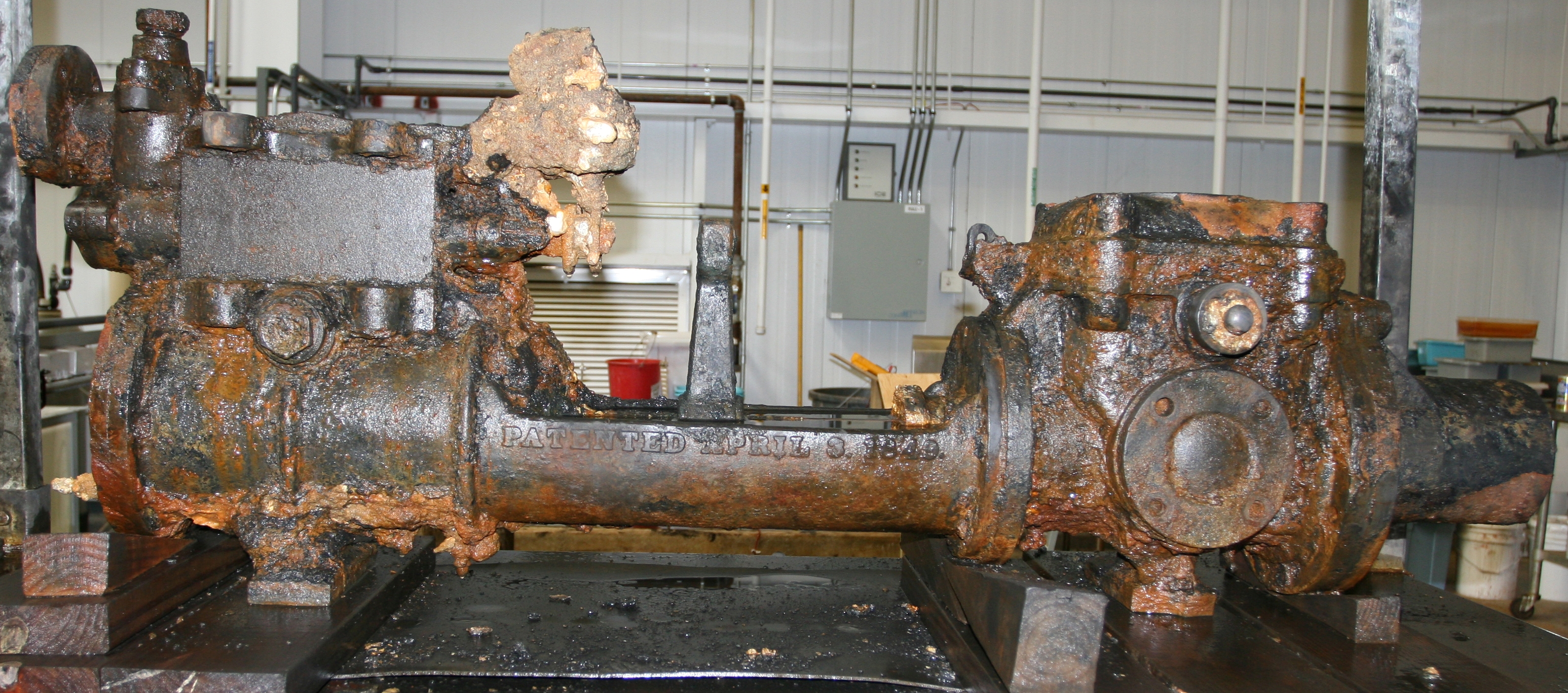
Port Worthington pump during conservation. Photo courtesy of The Mariners’ Museum
“Landmark status for the Worthington simplex pumps recognizes the contribution of the steam pumps to industrial history and to the progress of mechanical engineering,” said K. Keith Roe, current president of ASME. “The Worthington steam pumps join a roster of more than 250 other ASME engineering landmarks throughout the world. Each represents a progressive step in the evolution of our profession, while exemplifying the innovation and vision embodied in engineers everywhere.”
Howard H. Hoege III, interim president and CEO of The Mariners’ Museum, said, “We are distinctly honored to be awarded the ASME Historic Mechanical Engineering Landmark designation for the USS Monitor’s Worthington Pumps. This award is a symbol of the Museum’s role in preserving and presenting unique marine engineering inventions such as the Worthington Pumps, allowing us to inspire future generations to create new designs, technologies, and machines which will shape our world’s future.”
The simplex pumps from the iconic ironclad Monitor were designed by 19th-century engineering pioneer Henry R. Worthington, one of ASME’s co-founders. Worthington, a longtime associate of the Monitor’s designer John Ericsson, sold the pumps, built at Worthington & Baker Works in Greenpoint, New York, on January 10, 1862, for $582.22. They were installed on the Monitor to handle water for boiler, bilge, and fire-fighting needs.
Dr. Reginald I. Vachon, past president of ASME, said, “The Worthington steam pumps stood apart for their efficiency and reliability. Their compact size and lightweight design were vital features in marine applications, and the pumps also served as the basis for a variety of other industrial applications.”
Photo courtesy of The Mariners’ Museum
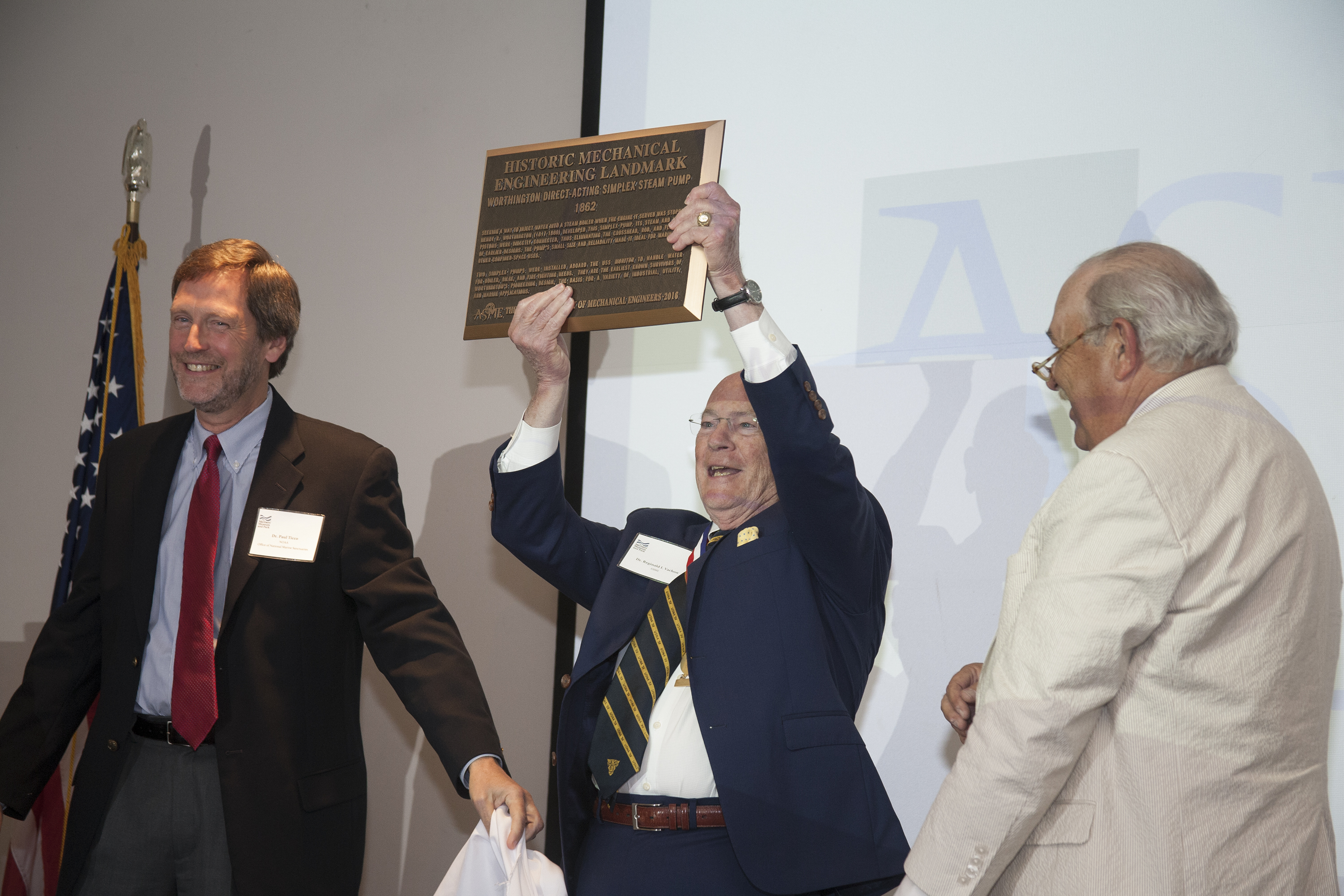
Vachon presented a bronze plaque to John V. Quarstein, director of the Monitor Center, and Dr. Paul Ticco, regional coordinator of the Office of National Marine Sanctuaries, at the August 25 ceremony. Guests were given behind-the-scenes laboratory tours led by Monitor Center conservators.
Recovered from the Monitor’s wreck site off Cape Hatteras, NC, in 2001 by National Oceanic and Atmospheric Administration (NOAA) and U.S. Navy divers, the pumps are believed to be the oldest surviving examples of Worthington’s simplex design. Undergoing conservation at the USS Monitor Center’s Batten Conservation Complex at The Mariners’ Museum and Park, the pumps will go on display at the Museum when conservation is complete.
The Monitor Center has crafted the only fully operational replica of one of the ship’s pumps. Will Hoffman, senior conservator/conservation project manager at the Monitor Center, gave a presentation about the making of the replica and a demonstration. Supporters of the Replica Project were recognized including Curtiss-Wright, Master Machine and Tool, and Hampton Rubber Company. Plans are to take the replica on a road tour that follows the Monitor Historic Trail from New York to North Carolina. When not on the road, the replica will be used for “STEAM” educational programming at the Museum.
The August 25 designation ceremony was sponsored by the American Society of Mechanical Engineers-Eastern Virginia Section and Curtiss-Wright.
Submitted by Jenna Dill, Marketing & Communications Manager, The Mariners’ Museum, August 25, 2016
Have you seen the latest ICMM Newsletter? The 3rd quarter issue for 2016 contains articles from around the globe . . .
“Asia is well represented by China, Hong Kong and Korea; South America, specifically Chile, has a story about a 19th century naval battle, as well as more news about the 2017 ICMM Congress in Valparaiso; Germany flies the flag for Europe and, of course, the President’s message is from the USA as is another naval story; and from the Pacific, Australia tells a grim story.”
As most of you are aware the next International Congress of Maritime Museums will take place 15-20 October, 2017. The 18th Congress will be hosted by the National Maritime Museum, Valparaiso, Chile. More information is available on the ICMM website. The deadline for the Call for Papers is November 17, 2016.
Submitted by Steve White, ICMM President, August 17, 2016.
CAMM is seeking a new administrator. This is a part-time, contract position.
The job objectives include:
1) To facilitate and enhance the performance of CAMM’s board by providing continuity; facilitating communications between Board members and the general membership; and implementing the initiatives of the board and officers.
2) To increase CAMM’s level of service to its members through improved and centralized communications between and among the members and the governing board, facilitating the sharing information and expertise among the membership and opportunities for them to network with their colleagues.
3) To help grow CAMM’s membership through outreach, recruitment and improved levels of service.
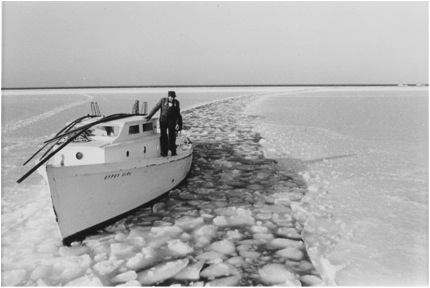
Robert de Gast photograph courtesy of the Chesapeake Bay Maritime Museum
A traveling exhibition, titled “Robert de Gast’s Chesapeake,” featuring the striking work of photojournalist Robert de Gast is offered by Chesapeake Bay Maritime Museum (CBMM). De Gast’s work—evocative, stark, and infused with a keenly abstract sensibility— ranges widely in subject and treatment. Whether his vibrant perspective on the places and culture of oystermen’s work, the sense of solitude that he sought in his solo voyages, or the abstract shapes and details of remote lighthouses, De Gast’s images are complex and informed by the modernist aesthetic. As he said to his photography students, “if you’re unhappy with the picture, you’re not close enough.”
De Gast’s black-and-white photography gained widespread attention with the publication of his 1970 book The Oystermen of the Chesapeake, a work that, according to Smithsonian curator Paula Johnson “builds a more nuanced, more atmospheric portrait. It is not a romanticized look at the work.” De Gast’s black-and-white photographic work, encompassing more than 10,000 images, is a key collection of the Chesapeake Bay Maritime Museum.
Before making these craft available to the general public, Mystic Seaport would like to offer CAMM members the chance to acquire two Hickman Model 13 Sea Sleds that are surplus to the needs of the museum. Both boats are offered free of charge to a bona fide 501(c)(3) historical organization. The new owner will, however, be responsible for all costs associated with moving the boats.
ACCESSIBLE SENSORY TOURS OF HISTORIC SHIPS NOW AVAILABLE
Explore New Ways to Experience San Francisco Maritime National Historical Park’s Vessels Free (With Regular Admission) Programs Focus on Senses Other Than Sight
SAN FRANCISCO, CA – The National Historic Landmark ships at Hyde Street Pier are a feast for the eyes, but there is more to them than what we can see. San Francisco Maritime National Historical Park is piloting a new program aimed at engaging visitors with visual impairments (but open to all groups) to experience the vessels in a new way – through smell, sound, touch, and feel. The new sensory tours are free with regular park admission, but must be scheduled at least two weeks in advance.
On these descriptive narrative tours, rangers guide visitors through a sensory experience on board the 1886 tall sailing ship Balclutha. The public are taken back to a time when sailors risked it all (bringing cargo from San Francisco around the treacherous Cape Horn to Europe) for meager pay. Visitors will feel the large, rough, twisted ropes in their hands as they haul away on the lines, smell greasy meat cooking in the galley, and hear Captain Alfred Durkee speaking (from his journals).
The 60-90 minute tours are geared toward small groups (around 10 people). At the close of each program, visitors will be invited to engage in self-guided tours of the other historic vessels.
To request a sensory tour, please contact Alice Watts at awatts@maritime.org. Although they are free with the park’s regular $10 admission, the tours need to be scheduled at least two weeks in advance.
The park offers assisted listening services on request. Sign Language interpreter services need to be requested at least five days in advance. Please contact the Accessibility Coordinator/Chief of Interpretation by telephone (415-859-6797) or email (safr_accessibility@nps.gov) for more information.
San Francisco Maritime NHP, located at the west end of Fisherman’s Wharf in San Francisco, includes a magnificent fleet of historic ships, Visitor Center, Maritime Museum, Maritime Research Center, and Aquatic Park Historic District. For more information, please call 415-447-5000 or visit http://www.nps.gov.safr. Follow us on Twitter @SFMaritimeNPS and Instagram sfmaritimenps and join us on FB @SanFranciscoMaritimeNHP.
Submitted by Lynn Cullivan, San Francisco Maritime NHP, August 5, 2016
Richard Everett at San Francisco Maritime NHP recently queried the membership on mast displays. Here is a summary of the results he received – Mast Display survey
Impact Grant Expands Public Access of the Annapolis Maritime Museum’s Growing Digital Archives
ANNAPOLIS, MD – The Annapolis Maritime Museum received a Strategic Impact Grant from the Arts Council of Anne Arundel County to build a virtual database of archives. This timely grant is making a big impact for the Museum’s online collections, and the Museum’s database has already encouraged local historians to submit their private collections for public use.
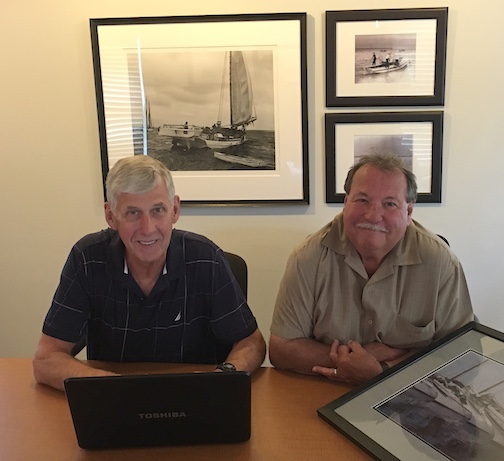
Over the past month, William Keyworth has been working with dedicated volunteers at the Annapolis Maritime Museum to digitize and make public his collection of thirty-seven color Kodak slides with vivid images of skipjacks on the Chesapeake Bay. These impressive photos were captured in the 1970s and 1980s, and can now be publicly accessed on the Museum’s website.
Many local residents remember a time when skipjack fleets sailed up and down the Chesapeake Bay, but they are scarcely seen today. Mr. Keyworth, explaining the motivation of his work, summarized, “I used to work in a boatyard repairing skipjacks, and these images capture moments in our local history when skipjacks were prolific on our beautiful Bay.” The photos display skipjacks sailing the Bay and in periods of maintenance, as well as the Sandy Point Lighthouse, Chesapeake Appreciation Days, catboats, and images of racing.
The Annapolis Maritime Museum deeply appreciates William Keyworth’s donation and continues to strive to make all of its collections more readily available to the broader public. Caitlin Swaim, the curator of the Annapolis Maritime Museum, is especially excited about this newest addition to the museum’s online archives. Swaim noted, “The online database allows the Annapolis Maritime Museum to reach a much wider audience and provides both historians and the public with new collections and resources for research.”
The Annapolis Maritime Museum is now accepting new submissions for the online database, where it will continue to build a local archive of maritime history.
The Annapolis Maritime Museum is a 501(c) 3 nonprofit organization dedicated to educating students and adults on the area’s rich maritime heritage and the ecology of the Chesapeake Bay through programs, exhibits and community events. The Museum partners with community groups, government entities, and other like-minded organizations to deliver high-quality educational initiatives and programs on subjects ranging from history and culture to the environment and good stewardship practices.
Submitted by M.K. Richardson, Annapolis Maritime Museum, July 19, 2016