The World Ocean Observatory has announced the launch of World Ocean Journal, a new bi-annual e-zine on ocean culture, issues and solutions to today’s ocean issues. The inaugural volume includes essays, interviews, art, exhibits and performances which profile some of the vital impacts of the ocean on our lives. The last essay, by director Peter Neill, contains his “reflections on ‘reciprocity’ as a rationale and framework for exchange of value and engagement between the ocean and us, between civil society and the natural world that sustains it.” For more on the journal’s content, click here.
The mission of the World Ocean Observatory is to provide a place of exchange about the ocean as defined as “an integrated, global, social system” relating the ocean to fresh water, climate, science, food, technology, finance, policy governance, coastal development, planning, and cultural traditions. World Ocean Journal, a new outreach effort by the World Ocean Observatory, is yet another extension of our efforts to educate the public, broaden our audience of Citizens of the Ocean, and present information and educational services as dynamic as the ocean itself.
Monitor Center lab is closed due to lack of federal funding
The Mariners’ Museum has made the difficult decision to temporarily close the 5,000-square foot lab that houses the USS Monitor‘s gun turret and other large artifacts following the Dec. 31, 2013 expiration of an agreement with the National Oceanic and Atmospheric Administration’s National Marine Sanctuary Program.
Simply put, The Mariners’ Museum cannot continue to shoulder the conservation costs for these artifacts, which belong to the federal government. In 2013, the conservation cost was approximately $500,000. NOAA was only able to provide 10 percent of funding, and no funding was designated in 2012, the 150th anniversary of the Monitor‘s historic clash with the Confederate ironclad Virginia in Hampton Roads.
The decision to close the “wet lab” does not impact the rest of the Museum operation. The Monitor exhibition Ironclad Revolution is still open, as is the rest of the exhibition space at The Mariners’ Museum. Also, though no progress in the artifacts’ treatment will be made during this period, the artifacts remain in a stable environment.
This is an emotional move for all of us, who feel deeply invested in the effort to tell the important story of the USS Monitor through its artifacts. Most affected is our team of Monitor conservators, some of whom have dedicated years to this project, and who consider themselves the guardians of the Monitor.
NOAA is waiting on Congress’ approval of a budget to determine what funding to make available this coming year. NOAA and The Mariners’ Museum are working together to ensure that funding is in place to continue this important conservation work. The lab will re-open once funding is secured.
You can help us by letting legislators and NOAA know you believe the government should designate funding for the Monitor conservation project at The Mariners’ Museum. Here are three ways you can do this:
CAMM is delighted to welcome our newest affiliate member, the Naval Historical Foundation, located in the Washington Navy Yard, Washington, D.C. “The Naval Historical Foundation preserves and honors the legacy of those who came before us. We educate and inspire the generations who will follow.” See more at http://www.navyhistory.org/about/mission
Mystic Seaport Director Steve White provided the following details:
I want to let CAMM members know about an upcoming opportunity to travel onboard the Charles W. Morganduring her historic 38th Voyage next summer. This will be the first time in 80 years this National Historic Landmark vessel will leave Mystic, Connecticut. The second oldest American ship afloat, the Morgan will voyage to seven New England ports including New Bedford and Boston, and spend several days on or near Stellwagen Bank National Marine Sanctuary.
We are seeking proposals for onboard participants from a wide range of backgrounds and skills – including scientists, artists, teachers, historians, playwrights, museum professionals, anthropologists, maritime archaeologists, whaling descendants, musicians, and writers. Each 38th Voyager will spend one night and the following day onboard the vessel, with a small group of other 38th Voyagers, the captain, crew, and a few additional guests.
This is a public-history project, so we seek proposed projects that will represent many different perspectives, reach different audiences, and find innovative ways to use the Morgan as a platform for recording, analyzing, interpreting, and sharing various aspects of the 38th Voyage. We encourage proposals that explore the wider local, national, and global stories to which she so strongly connects (see the Call For Proposals for the core project themes we’ve identified).
Please see the Call For Proposals for details – we’ll accept proposals from Dec. 1 through Dec. 31.
I received a call from National Park Service (NPS) this morning. The memorandum of agreement between MARAD and NPS enabling the transfer of funds for a public grants program according to the National Maritime Heritage Act was signed by MARAD. NPS has probably signed by now.
Our hard work on the Hill has paid off.
About $7M is available for the grants program– from the scrapping of ships in the National Defense Reserve Fleet by the Maritime Administration. NPS can claim 15% overhead per year. The grants will be offered over a four year period. The first request for proposals is expected by early 2014. Both agencies will participate in the distribution of the grants.
My thanks to all CAMM members and museums for staying the course these many years, contacting members of Congress when asked, and your commitment to maritime heritage.
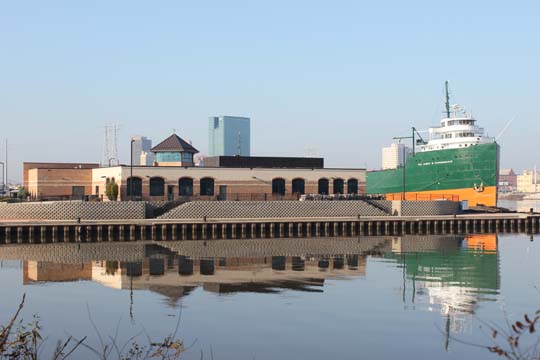
The Great Lakes Historical Society and Inland Seas Museum is moving to a new facility in Toledo, Ohio. CAMM will be there to help celebrate their grand opening in April. More details will be posted on CAMM’s annual meeting page as they become available.
Meanwhile please email session proposals to program chair Marifrances Trivelli, <trivelli at lamaritimemuseum.org>. We welcome topics on a wide range of issues of current importance to maritime museums, including but not limited to ship & small craft preservation, special collections, lighthouses/lifesaving stations, underwater archaeology, traveling exhibits, and social media. The proposal should include a brief synopsis of your presentation as well as contact information including email.
If you use boats to teach, it’s a tremendous opportunity to meet and learn from your peers.
This will also be the only TWSBA Conference of the East Coast for several years. So, if you’re nearby, this is the one to attend.
You need to Register Now!
If you’re coming, you need to register. Just fill out the form on our website and send it in, or FAX it, to Mystic Seaport.
If you’re still “on the fence” and need reasons to come, here are two:
Reason #1
The Conference dinner, on Tuesday the 15th, will honor the achievements of Dick and Colleen Wagner from the Center for Wooden Boats. Dick and Colleen created the Center For Wooden Boats. It’s safe to say that most of us have been strongly influenced and inspired by their work. Their trips to the East Coast have been getting rarer. So, don’t miss this chance to celebrate their achievements and say, “Thank You.”
Reason #2
There are going to be great presentations, panel discussions, hands on experiences and practical workshops. Just take a look at this list!
TWSBA 2013 Planned Presentations, Workshops and Experiences-
Presentations and Panel Discussions:
Leadership
Building To Teach – One Year Out
“Marinizing” the Common Core Standards-
Whaleboats for the Charles W. Morgan:
Serving AdultsWorking with In-School & Out-of School Youth; A Panel Discussion
The Role of the Social Workers and Counselors in TWSBA Organizations
Related Teaching Organizations; A Panel Discussion
Panel Discussion on Fundraising Strategies that Work;Panel Discussion on Incorporating Indigenous Content
Model Boats as Teaching Tools
Training Professional Boat Builders
Workshops
Taking Care of Basics
Planning Your New Program
Connecting To The Common Core Standards
Hands on Experiences:
Building and Using SeaPerch ROVs
How to Teach Steam Bending
Integrating Tools & Technology into Programs
Foil Boats for Teaching Math, Science and Engineering
Building and Using Indigenous Craft/ First Americans
Montauk Lighthouse. 2012 photo by Candace Clifford
113th CONGRESS
1st Session
S. RES. 204
Designating August 7, 2013, as ‘National Lighthouse and Lighthouse Preservation Day’.
IN THE SENATE OF THE UNITED STATES
July 30, 2013
Mr. KING (for himself and Ms. COLLINS) submitted the following resolution; which was considered and agreed to
RESOLUTION
Designating August 7, 2013, as ‘National Lighthouse and Lighthouse Preservation Day’.
Whereas August 7, 2013, marks the 224th anniversary of the signing by President George Washington of the Act entitled ‘An Act for the establishment and support of lighthouses, beacons, buoys, and public piers’, approved August 7, 1789 (commonly known as the ‘Lighthouse Act of 1789’) (1 Stat. 53, chapter 9);
Whereas that Act, the ninth act of the 1st Congress, established a Federal role in the support, maintenance, and repair of all lighthouses, beacon buoys, and public piers necessary for safe navigation, commissioned the first Federal lighthouse, and represents the first public works act in the young United States;
Whereas the establishment of the United States system of navigational aids set the United States on a path to the forefront of international maritime prominence and established lighthouses that played an integral role in the rich maritime history of the United States, as that history spread from the Atlantic coast, through the Great Lakes and the Gulf coast, to the Pacific States;
Whereas those iconic structures, standing at land’s end through 2 centuries, have symbolized safety, security, heroism, duty, and faithfulness;
Whereas architects, designers, engineers, builders, and keepers devoted, and in some cases jeopardized, their lives for the safety of others during centuries of light tending by the United States Lighthouse Service and the United States Coast Guard;
Whereas the automation of the light system exposed the historic lighthouse towers to the ravages of time and vandalism and yet, at the same time, opened an opportunity for citizen involvement in efforts to save and restore those beacons that mark the evolving maritime history of the United States and its coastal communities;
Whereas the national lighthouse preservation movement has gained momentum over the past half century and is making major contributions to the preservation of maritime history and heritage and, through the development and enhancement of cultural tourism, to the economies of coastal communities in the United States;
Whereas the National Historic Lighthouse Preservation Act of 2000 (Public Law 106-355; 114 Stat. 1385), enacted on October 24, 2000, and with the aid of the lighthouse preservation community, provides an effective process administered by the General Services Administration and the National Park Service for transferring lighthouses to the best possible stewardship groups;
Whereas, for the past several decades, regional and national groups have formed within the lighthouse preservation community to promote lighthouse heritage through research, education, tourism, and publications;
Whereas the earliest and largest regional preservation group, the Great Lakes Lighthouse Keepers Association, headquartered in Michigan, marks its 30th anniversary in 2013, and the largest and oldest national group, the United States Lighthouse Society, which relocated from San Francisco, California, to the State of Washington in 2008, marks its 30th anniversary in 2014;
Whereas other groups have also been formed to promote lighthouse preservation and history, many with regional chapters, including–
(1) a national leadership council and forum named the American Lighthouse Council (formerly the American Lighthouse Coordinating Committee), currently headquartered in Illinois;
(2) the American Lighthouse Foundation in Maine;
(3) the Michigan Lighthouse Alliance and Michigan Lighthouse Conservancy;
(4) the Maine Lights Program;
(5) the Outer Banks Lighthouse Society in North Carolina;
(6) the New Jersey Lighthouse Society;
(7) the Florida Lighthouse Association; and
(8) the Lighthouse Preservation Society in Massachusetts;
Whereas major lighthouse publications, including the United States Lighthouse Society’s Keeper’s Log and the Lighthouse Digest, contribute greatly to the promotion of lighthouse heritage and preservation;
Whereas single-lighthouse preservation efforts by individuals or organizations, including historical societies and governments, have even longer histories, including preservation efforts in–
(1) Grosse Point, Illinois, established in 1935;
(2) Buffalo, New York, established in 1962;
(3) Navesink Twin Lights, New Jersey, established in 1962;
(4) Point Fermin, California, established in 1970;
(5) Charlotte-Genesse near Rochester, New York, established in 1965;
(6) Key West, Florida, established in 1969;
(7) Split Rock Lighthouse, Minnesota, established in 1971;
(8) Ponce de Leon Inlet, Florida, established in 1972;
(9) St. Augustine, Florida, established in 1981; and
(10) Fire Island, New York, established in 1982;
Whereas, despite progress, many lighthouses in the United States remain threatened by erosion, neglect, vandalism, and deterioration by the elements;
Whereas Congress passed, and President Ronald Reagan signed, a Joint Resolution entitled ‘Joint Resolution designating the day of August 7, 1989, as ‘National Lighthouse Day’, approved November 5, 1988 (Public Law 100-622; 102 Stat. 3201), in honor of the bicentennial of the United States Lighthouse Service; and
Whereas the many completed, ongoing, or planned private and public efforts to preserve lighthouses demonstrate the public support for those historic structures: Now, therefore, be it
Resolved, That the Senate–
(1) designates August 7, 2013, as ‘National Lighthouse and Lighthouse Preservation Day’;
(2) encourages lighthouse grounds to be made open to the general public to the extent feasible; and
(3) encourages the people of the United States to observe National Lighthouse and Lighthouse Preservation Day with appropriate ceremonies and activities.